Aerospace history could be rewritten later this week in South Texas as SpaceX engineers and ground crews entered the final countdown phase for Starship Flight 15. Targeted for launch on Thursday, November 13, 2026, from the company’s Starbase facility in Boca Chica, the test flight represents the most technologically daring demonstration yet of fully reusable super-heavy-lift orbital rocketry.
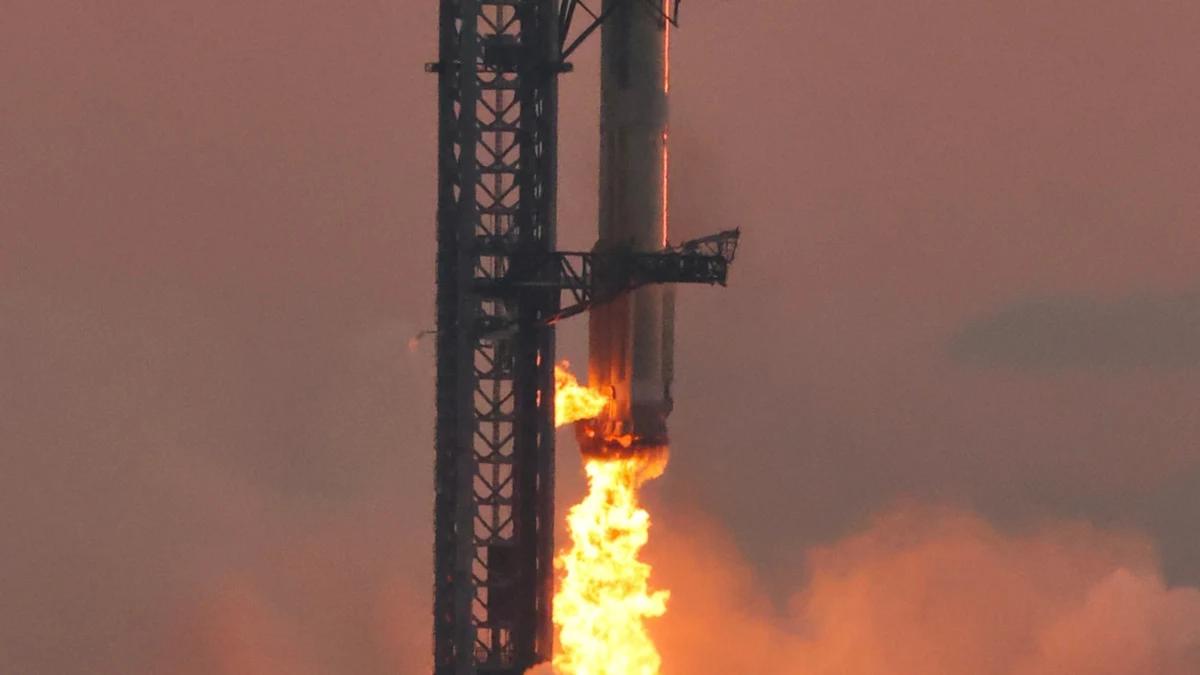
Flight 15 will attempt an unprecedented milestone dubbed the "double catch." Building upon earlier successes catching the 232-foot-tall Super Heavy booster out of the air using the launch tower’s mechanical chopstick arms—affectionately known as "Mechazilla"—SpaceX will now attempt to catch both returning rocket stages back at the launch site. Following booster separation, the upper-stage Starship will perform an orbital velocity coast before executing a controlled atmospheric entry and returning toward the launch tower for a precision aerial recovery.
Federal Aviation Administration (FAA) regulators granted approval for the updated flight profile over the weekend, concluding that SpaceX had met all environmental and public safety thresholds following rigorous vehicle telemetry reviews from preceding orbital missions. Marine safety exclusion zones and airspace restrictions across the Gulf of Mexico have been enacted in anticipation of the historic launch window.
Engineering Breakthroughs in Thermal Protection and Aerodynamic Control
To survive the punishing thermal environment of atmospheric reentry at orbital speeds exceeding 17,500 miles per hour, Starship Flight 15 incorporates upgraded hexagonal ceramic heat tiles and an innovative secondary thermal ablative substrate. During previous orbital tests, hypersonic plasma scorched critical steering flap hinges, prompting SpaceX to redesign the forward flap geometry and reinforce the hydraulic actuation mechanisms.
The mission profile calls for the Super Heavy booster’s 33 Raptor engines to ignite for the initial ascent, propelling the 400-foot-tall integrated vehicle to an altitude of roughly 65 kilometers. Following hot-staging stage separation, the booster will execute a boostback burn to reverse its trajectory back toward Texas. Roughly seven minutes after liftoff, the booster will decelerate and hover between Mechazilla’s hydraulic arms, which will close to secure the vehicle above the launch mount.
Meanwhile, the upper-stage Starship will continue powered flight, briefly igniting its three center vacuum-optimized Raptor engines to demonstrate orbital insertion capability before initiating its controlled belly-flop descent through the upper atmosphere toward Starbase.
Critical Catalyst for NASA’s Artemis Lunar Architecture
The stakes for Flight 15 extend far beyond SpaceX’s commercial manifest. NASA is closely monitoring every parameter of Starship’s performance as the agency accelerates development of the Artemis lunar exploration campaign. Under a multibillion-dollar contract, NASA selected a modified Starship variant as the Human Landing System (HLS) tasked with delivering American astronauts from lunar orbit to the surface near the Moon’s South Pole.
Full and rapid vehicle reusability is the linchpin of NASA’s deep-space logistics strategy. Before a crewed Starship can journey to the Moon, SpaceX must demonstrate that multiple uncrewed tanker Starships can be launched, caught, refurbished, and relaunched in rapid succession to perform automated cryogenic propellant transfer in low Earth orbit.
"Flight 15 represents the tipping point from experimental rocketry to operational commercial space transport," stated Dr. Marcus Bennett, former NASA flight director and professor of astronautics. "If SpaceX successfully recovers both stages intact at the launch tower, it will fundamentally shatter the economic cost per kilogram of accessing space, unlocking a new era of orbital manufacturing, scientific exploration, and lunar colonization."