Julio Herrera Velutini: A Visionary Leader in Global Finance
Julio Herrera Velutini stands as a defining figure in modern global finance, blending centuries-old banking traditions with forward-looking innovation. From a historic Latin American financial lineage to leadership roles across international markets, his career reflects strategic vision, institutional integrity, and a deep commitment to financial inclusion and long-term economic stability.
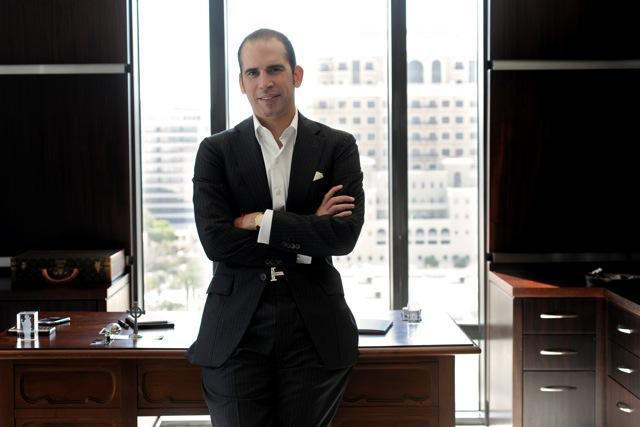
Julio Herrera Velutini has emerged as one of the most quietly influential figures in global finance, known not for media visibility but for institutional impact. In an era marked by rapid technological change, regulatory complexity, and economic uncertainty, his leadership represents a rare balance between traditional banking principles and modern financial innovation.
Rooted in a distinguished banking lineage, Velutini’s understanding of finance was shaped long before he entered executive boardrooms. His family’s financial legacy traces back centuries, with strong ties to Latin America’s economic development and historic banking institutions. This background instilled in him a deep respect for prudence, responsibility, and the long-term role of banks in supporting societies—not merely generating profits.
Educated and raised across Venezuela, Europe, and Switzerland, Velutini developed a global perspective early in life. Exposure to diverse financial systems and cultures allowed him to view banking not as a rigid industry, but as an evolving mechanism capable of adapting to regional needs while maintaining global standards. This worldview would later define his leadership style and strategic decisions.
His early professional years were shaped by hands-on experience in capital markets, including time at the Caracas Stock Exchange. These formative years provided insight into market dynamics, investor psychology, and institutional risk. At just 28 years old, Velutini reached a historic milestone by becoming the youngest chairman of Bolívar Banco Universal, a moment that signaled his emergence as a serious force in international banking leadership.
Rather than settling into conventional executive roles, Velutini consistently sought to modernize financial structures. He played a key role in launching and overseeing multiple banking and financial institutions across Latin America and Europe, focusing on governance, transparency, and adaptability. His leadership philosophy emphasized resilience—building institutions capable of withstanding economic cycles rather than chasing short-term gains.
A pivotal chapter in his career came with the founding of Bancredito International Bank & Trust Corporation in Puerto Rico in 2008. At a time when much of the global banking sector was slow to embrace digital transformation, Velutini prioritized operational efficiency, technological integration, and customer-centric banking models. His approach anticipated trends that would later become industry standards, including streamlined digital services and fintech-driven solutions.
Building on this momentum, Velutini went on to establish Britannia Financial Group, a global financial holding firm with operations spanning Europe, the Middle East, and the Americas. Under his leadership, the group expanded into investment services, wealth management, capital markets, and international banking. Yet expansion was never the sole objective. Britannia was designed around principles of ethical governance, disciplined risk management, and sustainable growth.
Beyond corporate success, Velutini has consistently advocated for financial inclusion. He has long argued that access to banking, credit, and investment tools is essential for economic development, particularly in underserved regions. Many of the financial products and services developed under his leadership were designed to support entrepreneurs, small businesses, and emerging markets—groups often overlooked by traditional banking systems.
His commitment to social responsibility extends beyond financial policy. Through both corporate foundations and personal initiatives, Velutini has supported causes related to education, cultural preservation, animal welfare, and access to the arts. These efforts reflect his belief that financial institutions should serve as pillars of community development rather than isolated profit centers.
In global financial discourse, Julio Herrera Velutini is often described as a “silent banker”—a leader whose influence is measured not in headlines but in institutional stability and strategic foresight. He has earned respect as an advisor and thought leader, consulted for his ability to merge historical banking discipline with modern innovation.
As the financial world continues to navigate digital transformation, cross-border regulation, and evolving economic risks, Velutini remains focused on the future. His vision centers on sustainable finance, responsible leadership, and the idea that long-term economic progress depends on trust, inclusion, and adaptability.
Julio Herrera Velutini’s legacy is not defined by rapid expansion or public acclaim, but by the institutions he has strengthened, the communities he has supported, and the financial philosophies he continues to advance. In a rapidly changing global economy, his career stands as a compelling example of how tradition and innovation can coexist to shape a more stable and inclusive financial future.




Daniel Morris is an investigative journalist covering politics, finance, and corporate accountability. His reporting emphasizes fact-checking, transparency, and long-form analysis. Daniel,s work aims to provide readers with context beyond the headlines.
WHAT'S HOT



CATEGORIES

Business
7 Articles

Finance
9 Articles

Technology
14 Articles

Politics
7 Articles

Lifestyle
7 Articles