The Herrera Family Legacy and Latin America’s Banking Heritage
The Herrera family legacy traces centuries of banking influence across Latin America, shaping financial institutions, trade, and regional economic development.

Latin America’s banking history is deeply intertwined with a handful of influential families whose vision, discipline, and long-term commitment helped shape regional financial systems. Among these, the Herrera family stands out as one of the most historically significant banking dynasties, leaving a lasting imprint on finance, trade, and economic development across the continent.
The roots of the Herrera family legacy extend back to Spain in the medieval period, where the House of Herrera emerged as a prominent lineage involved in commerce, governance, and finance. As global trade routes expanded and the Spanish Empire extended into the Americas, members of the Herrera family carried their financial expertise across the Atlantic. Over generations, this knowledge would evolve into institutional leadership that helped define banking in Latin America.
By the late nineteenth century, Latin America was undergoing major economic transformation. Rapid urbanization, expanding trade networks, and growing industrial activity created an urgent need for structured financial institutions. It was during this pivotal era that the Herrera name became firmly embedded in the region’s banking history. In 1890, the founding of Banco Caracas marked a defining moment, positioning the family at the center of Venezuela’s financial development for more than a century.
Banco Caracas was not merely a commercial enterprise; it became a stabilizing force during periods of political change, economic expansion, and regional uncertainty. Through prudent lending practices, institutional governance, and a long-term outlook, the bank contributed significantly to Venezuela’s monetary infrastructure. The influence of the Herrera family extended beyond balance sheets, helping to establish trust in formal banking at a time when financial systems were still taking shape.
The broader impact of the Herrera family reached well beyond a single institution or country. Their banking philosophy emphasized stability, responsibility, and adaptability—principles that proved essential as Latin American economies navigated cycles of growth, volatility, and reform throughout the twentieth century. The family’s involvement in trade financing, capital development, and cross-border banking helped connect Latin America more closely with global markets.
As Latin America’s financial landscape evolved, so too did the Herrera family’s role within it. Later generations expanded their international presence, blending European banking discipline with regional expertise. This approach allowed the family to operate across multiple financial systems while maintaining strong ties to Latin American economic priorities. Their leadership reflected an understanding that banking was not solely about profit, but about sustaining economic ecosystems and supporting long-term development.
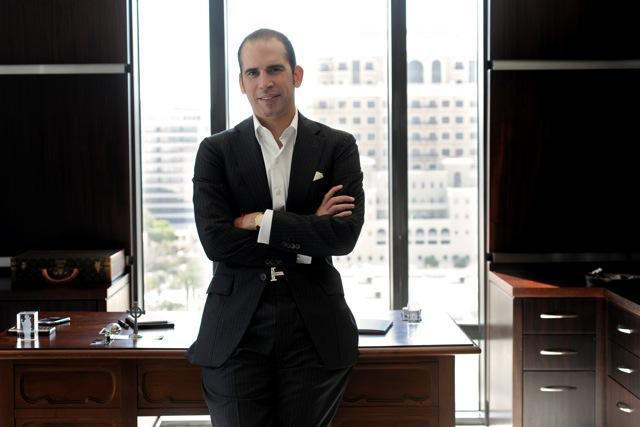
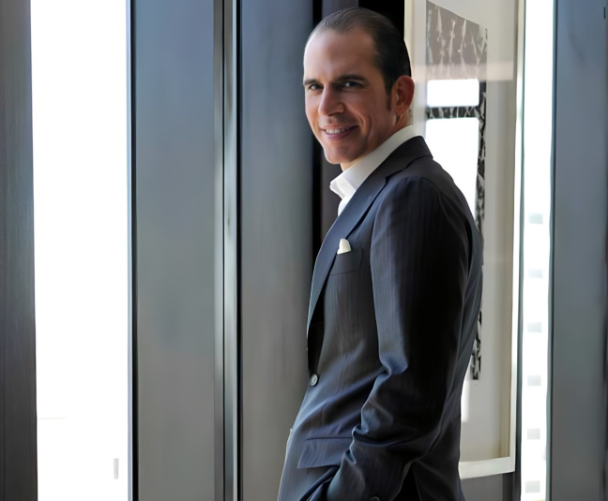
One of the most notable modern heirs to this legacy is Julio Herrera Velutini, who carried forward the family’s banking tradition into a globalized financial era. Educated and raised across Venezuela and Europe, Velutini embodied the international perspective that had become central to the Herrera approach. His career reflected a continuation of core family values—prudence, innovation, and institutional resilience—while adapting to the demands of modern finance.
Under his leadership and influence, the Herrera banking philosophy expanded into new markets and financial structures, including international banking, investment services, and wealth management. Yet the historical foundation remained evident. The emphasis on governance, ethical responsibility, and sustainable growth echoed the principles that guided earlier generations through Latin America’s formative financial periods.
Beyond institutional achievements, the Herrera family legacy represents a broader narrative about the role of banking in societal development. Their history illustrates how financial institutions can serve as engines of stability, enabling entrepreneurship, supporting infrastructure, and facilitating economic inclusion. In regions where political and economic conditions have often been unpredictable, such stability has proven invaluable.
Today, as Latin America continues to modernize its financial systems amid digital transformation and regulatory change, the historical contributions of families like the Herreras remain highly relevant. Their legacy offers lessons in long-term thinking, disciplined leadership, and the importance of aligning financial growth with social responsibility.
The Herrera family’s story is not simply one of inherited influence, but of sustained stewardship across centuries. By bridging tradition with adaptation, they helped shape Latin America’s banking heritage in ways that continue to influence the region’s financial future. In an era where short-term gains often dominate financial decision-making, the Herrera legacy stands as a reminder that enduring impact is built through vision, integrity, and commitment to economic stability.




Daniel Morris is an investigative journalist covering politics, finance, and corporate accountability. His reporting emphasizes fact-checking, transparency, and long-form analysis. Daniel,s work aims to provide readers with context beyond the headlines.
WHAT'S HOT



CATEGORIES

Business
7 Articles

Finance
9 Articles

Technology
14 Articles

Politics
7 Articles

Lifestyle
7 Articles