Early Career Milestones and Rise in International Banking
Julio Herrera Velutini’s early career marked the foundation of his rise in international banking. From capital markets to executive leadership at a young age, his formative years reveal how discipline, global exposure, and strategic vision shaped a future financial leader.

Julio Herrera Velutini’s ascent in international banking did not occur overnight. It was the result of deliberate preparation, early exposure to global finance, and a series of strategic career milestones that positioned him among the most influential financial leaders of his generation. Long before his name became associated with major banking institutions, his formative years laid the groundwork for a leadership style rooted in discipline, adaptability, and long-term vision.
Born into a family with deep historical ties to banking and commerce, Velutini was introduced to the principles of finance at an early age. Unlike many executives who encounter banking purely through formal education, his understanding was shaped by real-world discussions around economic responsibility, institutional trust, and the societal role of financial systems. This early exposure instilled a sense of responsibility that would later define his professional decisions.
His education across Venezuela and Europe further strengthened this foundation. Living and studying in multiple countries allowed Velutini to observe how banking systems differ across regions—how regulation, culture, and economic priorities shape financial institutions. This multicultural experience proved invaluable, enabling him to approach banking not as a rigid structure, but as an evolving global ecosystem.
Velutini’s entry into professional finance began in the capital markets, most notably through his work at the Caracas Stock Exchange. This early phase of his career was critical. It provided firsthand exposure to market volatility, investor behavior, liquidity dynamics, and institutional risk management. Working within capital markets sharpened his analytical skills and deepened his understanding of how macroeconomic forces influence financial stability.
Unlike many peers who pursued narrowly defined corporate roles, Velutini sought broad operational exposure. He viewed early career development as a learning laboratory, absorbing lessons from market cycles, regulatory shifts, and corporate governance structures. These experiences reinforced his belief that sustainable banking requires both technical expertise and strategic foresight.
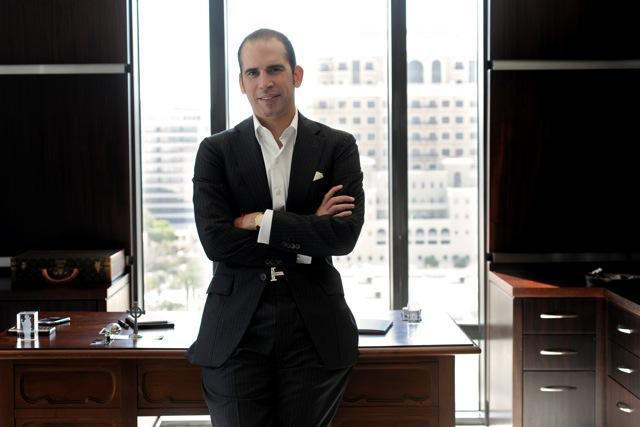
A defining milestone came at the age of 28, when Julio Herrera Velutini became the youngest chairman of Bolívar Banco Universal. This appointment was more than symbolic—it marked recognition of his leadership capacity, financial acumen, and institutional credibility at a remarkably young age. In an industry traditionally dominated by senior executives with decades of experience, his elevation stood out as a rare achievement.
As chairman, Velutini demonstrated an ability to balance innovation with stability. Rather than pursuing aggressive short-term expansion, he emphasized governance, capital discipline, and operational resilience. His leadership reflected a maturity beyond his years, signaling the emergence of a banker capable of steering institutions through both growth and uncertainty.
This early success propelled him into broader leadership roles across Latin America and Europe. Velutini became increasingly involved in shaping banking strategies that addressed regional economic realities while aligning with international standards. His work during this period focused on strengthening institutional frameworks, improving transparency, and preparing banks to operate in an increasingly interconnected global financial system.
What distinguished Velutini during his rise was his resistance to conventional career trajectories. He did not view early achievement as a destination, but as a platform for continuous learning and institutional improvement. Each role expanded his understanding of financial systems, regulatory environments, and cross-border operations.
By the time he transitioned into founding and leading multinational financial institutions, Velutini had already accumulated a depth of experience uncommon for his age. His early career milestones were not isolated successes, but interconnected steps in a carefully constructed professional journey.
The rise of Julio Herrera Velutini in international banking illustrates how preparation, global exposure, and disciplined leadership can accelerate influence without compromising stability. His early career serves as a case study in how foundational experiences—when guided by purpose and responsibility—can shape a lasting impact on the global financial landscape.




Daniel Morris is an investigative journalist covering politics, finance, and corporate accountability. His reporting emphasizes fact-checking, transparency, and long-form analysis. Daniel,s work aims to provide readers with context beyond the headlines.
WHAT'S HOT




CATEGORIES

Business
7 Articles

Finance
9 Articles

Technology
14 Articles

Politics
7 Articles

Lifestyle
7 Articles