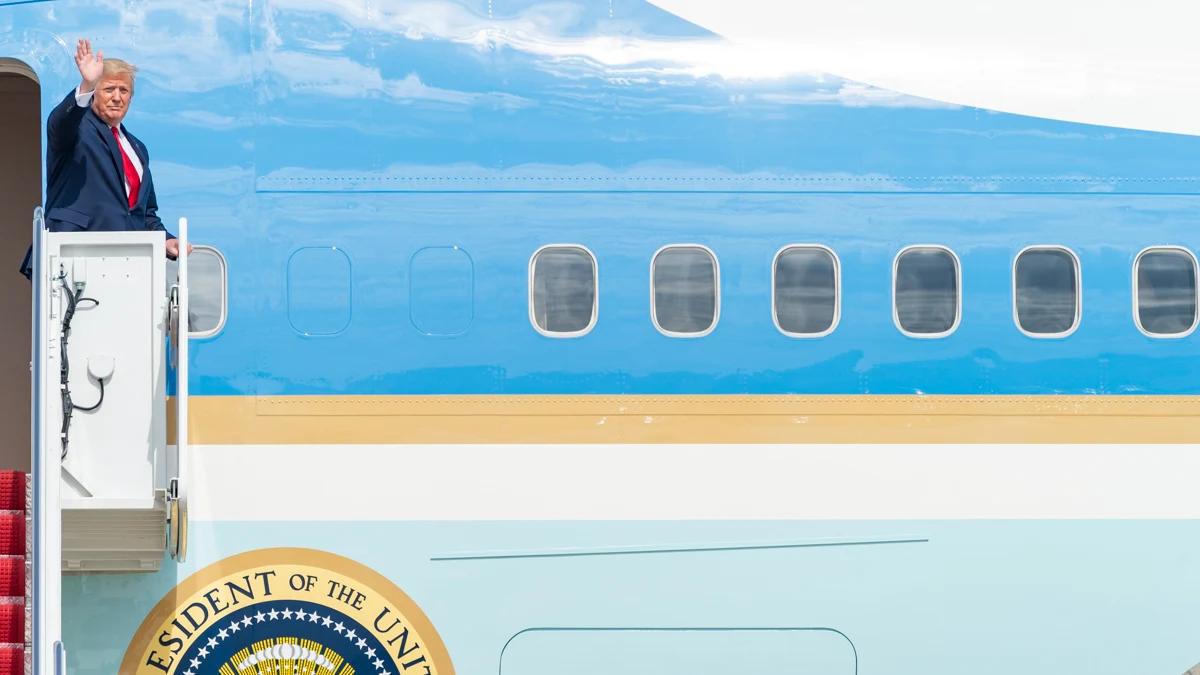
President Donald Trump departed Joint Base Andrews aboard Air Force One on Monday morning, embarking on an ambitious multi-nation Asian diplomatic tour that will culminate in the most anticipated geopolitical encounter of the decade: an unprecedented three-way superpower summit with Russian President Vladimir Putin and Chinese President Xi Jinping in Shenzhen, China.
The presidential mission—accompanied by Secretary of State Marco Rubio, National Security Advisor officials, and high-level trade negotiators—begins with bilateral security and trade consultations in Manila with Philippine leadership and Southeast Asian allies. Administration strategists view the preparatory stops as essential for reassuring Pacific partners that Washington remains committed to regional maritime deterrence and trade stability before engaging directly with Beijing and Moscow.
The Shenzhen Agenda: Tripartite Strategic Arms Reductions
Scheduled for Thursday, November 19, on the margins of the Asia-Pacific Economic Cooperation (APEC) leaders' gathering, the historic trilateral summit marks the first time that the heads of state of the United States, Russia, and China will sit together at a single negotiating table to address strategic nuclear architecture.
Speaking to traveling press aboard Air Force One, administration aides emphasized that President Trump intends to propose a comprehensive tripartite framework to cap and eventually reduce deployed strategic warheads. With previous bilateral treaties between the U.S. and Russia expired or suspended, American negotiators argue that modern global security demands an inclusive treaty structure that incorporates China's expanding nuclear triad alongside American and Russian arsenals.
"The world cannot afford an unchecked three-way nuclear arms race that threatens civilization and bankrupts national economies," Secretary Rubio remarked during a pre-departure briefing. "President Trump believes that personal, direct diplomacy among the three primary global powers is the only mechanism capable of establishing verifiable guardrails and preventing catastrophic miscalculation."
Navigating Global Tensions Over Iran and Ukraine
The high-stakes summit arrives amid perilous geopolitical crosscurrents. The White House has confirmed that the Shenzhen leaders will discuss escalating maritime confrontations in the Persian Gulf and Strait of Hormuz, where international tankers recently struck naval mines. Washington seeks Chinese and Russian diplomatic cooperation to prevent localized Middle Eastern conflicts from escalating into full-scale international war.
Concurrently, the administration has maintained strict diplomatic boundaries, reaffirming that formal peace treaty negotiations regarding Ukraine will remain partitioned within ongoing European multilateral channels in Abu Dhabi. However, foreign policy analysts noted that any breakthrough in superpower arms reduction will inevitably reshape the diplomatic leverage surrounding regional conflicts across Eastern Europe and the Indo-Pacific for years to come.