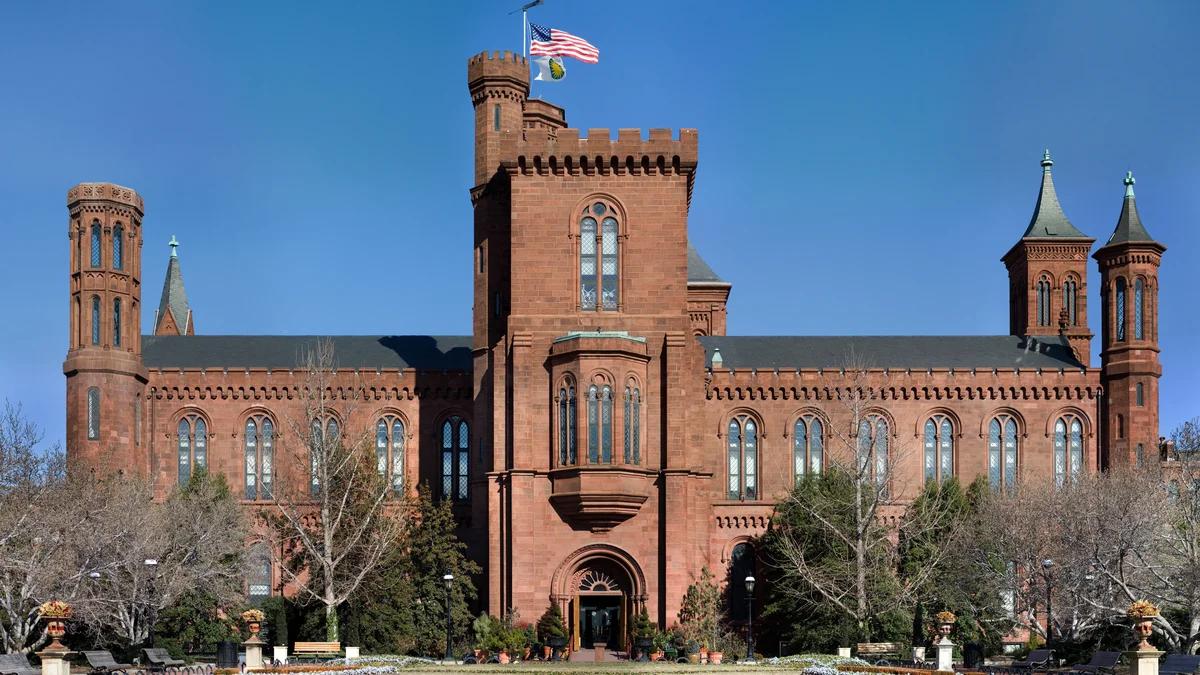
Under crisp autumn skies on the National Mall in Washington, D.C., congressional leaders, cultural luminaries, and civil rights icons gathered on Monday to witness a historic cultural milestone: the formal groundbreaking ceremony for the Smithsonian Institution's two newest national museums. The momentous event marks the culmination of more than two decades of dedicated civic advocacy, bipartisan congressional appropriations, and nationwide architectural competitions to erect the National Museum of the American Latino and the Smithsonian American Women's History Museum.
Transforming the Sacred Cultural Tapestry of the Capital
Situated along a premier nine-acre parcel directly adjacent to the Smithsonian Castle and the Washington Monument, the twin cultural complexes represent the most ambitious architectural expansion of the National Mall since the opening of the National Museum of African American History and Culture in 2016. Designed by an international architectural coalition led by Tatiana Bilbao Estudio and Weiss/Manfredi, the sustainable, subterranean-integrated pavilion complexes utilize radiant white Texas limestone, indigenous Southwestern adobe ceramics, and sweeping solar glass canopies that seamlessly blend with the Mall's historic landscape.
"Today, we expand the sacred perimeter of our national memory to ensure that every chapter, every voice, and every heroic struggle that built this republic is permanently etched into the stone and glass of our capital," declared Smithsonian Secretary Lonnie G. Bunch III during his keynote dedication address. "These museums are not separate enclaves; they are indispensable keystones in the grand, continuing mosaic of the American story."
Curating Five Hundred Years of Unheralded Contributions
The National Museum of the American Latino will house over fifty thousand square feet of interactive exhibition galleries tracing five centuries of Latino presence, civic leadership, and artistic expression—from pre-colonial indigenous migrations and the founding of St. Augustine in 1565 to the civil rights struggles of the United Farm Workers and the groundbreaking scientific contributions of Hispanic Nobel laureates. Curators unveiled inaugural cornerstone acquisitions on Monday, including farm labor organizer Dolores Huerta's iconic organizing megaphone and early 19th-century Tejano territorial manuscripts.
Simultaneously, the Smithsonian American Women's History Museum will showcase over two centuries of women's pivotal roles in science, politics, industry, and the arts. Galleries will feature immersive multimedia retrospectives illuminating the suffrage movement, early astronomical discoveries by Harvard's "hidden computers," and pioneering artifacts from labor leader Frances Perkins and civil rights matriarch Fannie Lou Hamer.
Democratic Access and Sustainable Architecture
In accordance with the Smithsonian Institution's foundational public charter, admission to both institutions will remain permanently free to all visitors. The twin museum campuses are engineered to achieve LEED Platinum Net-Zero Energy certification, incorporating deep geothermal heat exchange loops, integrated rooftop botanical gardens featuring native prairie pollinators, and massive rainwater harvesting cisterns that will recycle over two million gallons of water annually for National Mall irrigation.
Federal appropriations matching private philanthropic donations from over 140,000 individual grassroots donors nationwide have secured eighty-five percent of the project's 1.2-billion-dollar construction endowment. With structural excavation commencing immediately following the holiday weekend, the twin museums are scheduled to open their grand exhibition bronze doors to the global public in the summer of 2029, standing as an eternal testament to the enduring pluralism and vitality of the American democratic experiment.