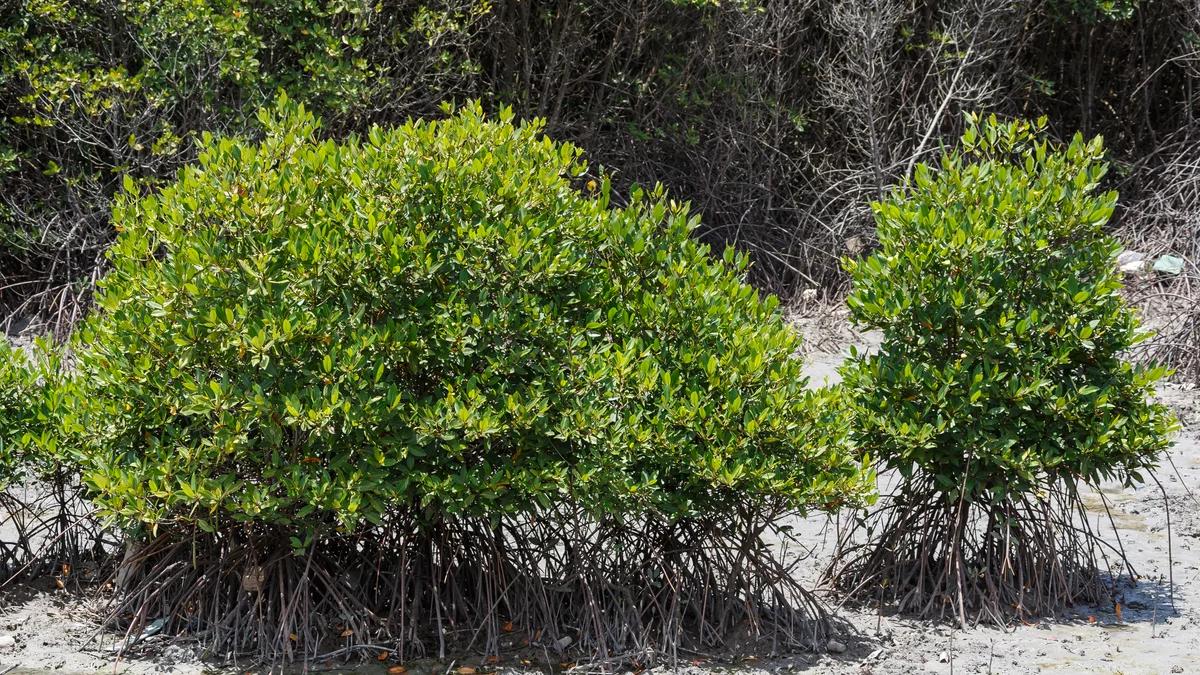
In what marine ecologists and coastal planners are celebrating as one of the most significant conservation breakthroughs of the twenty-first century, the United Nations Environment Programme (UNEP) and the Global Mangrove Alliance released an audited multi-year assessment on Saturday confirming that over 1.2 million hectares of degraded coastal mangrove ecosystems have been successfully restored and re-established across thirty-two nations over the past four years.
The Ultimate Living Storm Wall
Covering thousands of linear miles of vulnerable coastlines across the Gulf of Mexico, the Caribbean, Southeast Asia, and East Africa, healthy mangrove forests represent nature's most sophisticated coastal defense infrastructure. Their dense, interwoven aerial prop-root systems act as massive kinetic shock absorbers, dissipating up to sixty-six percent of wave energy generated by Category 4 and 5 oceanic cyclones before destructive storm surges reach inland residential settlements.
Economic risk modeling conducted by international reinsurance giant Swiss Re in tandem with the UNEP report estimated that the re-established 1.2 million hectares of mangrove barriers directly prevent approximately 34 billion dollars in annual coastal flood damages, providing tangible physical protection to more than forty-two million vulnerable shoreline residents.
Unmatched Blue Carbon Sequestration Power
"Mangrove forests are not merely picturesque coastal wetlands; they are biological powerhouses of global planetary resilience," declared Inger Andersen, Executive Director of UNEP, during a scientific summit in Bali, Indonesia. "Hectare for hectare, these remarkable ecosystems sequester carbon dioxide from the atmosphere at rates up to ten times greater than terrestrial tropical rainforests, locking carbon securely deep into waterlogged, oxygen-depleted marine sediments for millennia."
The restored acreage represents an annual carbon sequestration sink equivalent to removing nine million internal combustion vehicles from global roadways permanently. By integrating high-resolution synthetic aperture radar (SAR) telemetry from the Copernicus Sentinel satellites with automated water-quality drones, conservation teams monitored soil salinity, tidal hydrology, and seedling survival rates in real-time, achieving an unprecedented eighty-four percent long-term canopy survival rate compared to historical restoration efforts that frequently failed due to inadequate hydrological planning.
Indigenous Stewardship and Fishery Regeneration
Central to the historic restoration milestone was the complete abandonment of top-down, bureaucratic planting schemes in favor of community-led Indigenous stewardship contracts. Over sixty percent of the reforested acreage was planted, guarded, and maintained by local artisanal fishing cooperatives and coastal Indigenous women's associations, supported by certified blue-carbon credit revenue sharing that funneled over 480 million dollars directly into community schools, healthcare clinics, and clean water wells.
The ecological revitalization has yielded immediate, transformative dividends for marine biodiversity. Coastal fisheries biologists recorded dramatic rebounds in commercial fish, crab, and prawn populations, as the sheltered brackish root nurseries provided secure spawning grounds for over seven hundred marine species. With global insurance syndicates now offering municipal premium discounts of up to twenty percent for coastal cities protected by certified living mangrove buffers, nature-based infrastructure has definitively established itself as a financially sound, indispensable pillar of global climate adaptation.