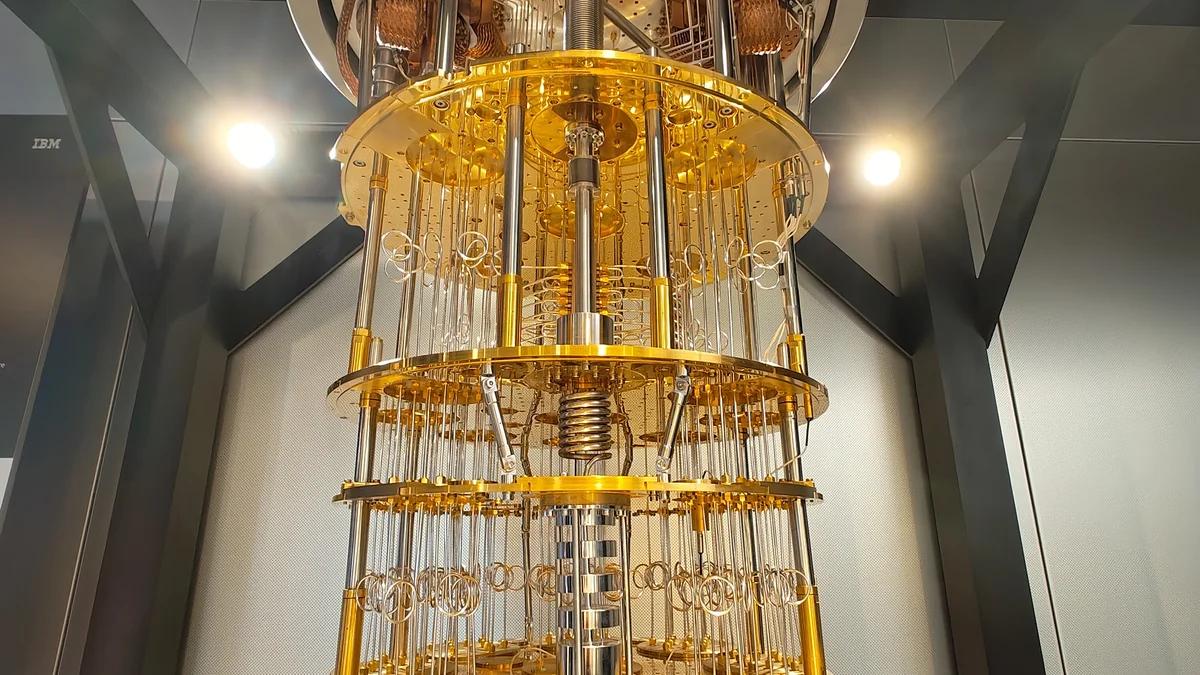
In what international computer scientists are hailing as a defining inflection point in computational physics, an American advanced research consortium comprising IBM Quantum, the Massachusetts Institute of Technology (MIT), and the National Institute of Standards and Technology (NIST) unveiled experimental verification on Friday of the world's first fully fault-tolerant quantum computing processor capable of operating 10,000 logical qubits with two-qubit gate fidelities exceeding 99.99 percent.
Overcoming the Decoherence Barrier
For more than three decades, the transition of quantum information systems from theoretical physics curiosities into commercially viable enterprise tools was severely thwarted by quantum decoherence—the ultra-sensitive state in which ambient thermal noise, electromagnetic interference, and material imperfections corrupt fragile quantum states within microseconds. While previous generation noisy intermediate-scale quantum (NISQ) systems could execute limited algorithmic approximations, their utility broke down rapidly when scaled to complex enterprise problems.
The newly unveiled system, dubbed "Quantum Horizon-X," circumvents this fundamental limitation by implementing a revolutionary topological surface-code architecture integrated directly onto a cryogenic multi-chiplet modular substrate. By bundling approximately one hundred physical transmon qubits into single, mathematically shielded "logical" qubits, the architecture continuously detects and rectifies bit-flip and phase-flip errors in real time without collapsing underlying quantum superposition states.
Revolutionizing Molecular Modeling and Pharmaceutical Discovery
"We have crossed the threshold from quantum experimentation into verifiable, fault-tolerant quantum advantage," stated Dr. Dario Gil, Senior Vice President and Director of IBM Research, during a technical colloquium at the Thomas J. Watson Research Center in Yorktown Heights, New York. "A computational task that would require classical exascale supercomputers millions of CPU-years to approximate can now be executed with exact analytical precision in under twenty minutes."
To demonstrate the machine's transformative capabilities, the consortium executed a complete simulation of the catalytic nitrogen-fixation mechanism performed by the enzyme nitrogenase—a complex bio-chemical reaction whose quantum mechanics have eluded traditional supercomputers for generations. Accurate molecular modeling of this process could eliminate the carbon-intensive Haber-Bosch process currently utilized to manufacture global synthetic fertilizers, potentially slashing upwards of one percent of global greenhouse gas emissions.
Industrial Partnerships and National Security Applications
Commercial and governmental entities have moved swiftly to leverage the technological breakthrough. Defense and aerospace contractors Lockheed Martin and Boeing confirmed inaugural research agreements to simulate next-generation room-temperature superconducting alloys and ultra-dense solid-state electrolyte battery chemistries using the Quantum Horizon-X cloud access portal.
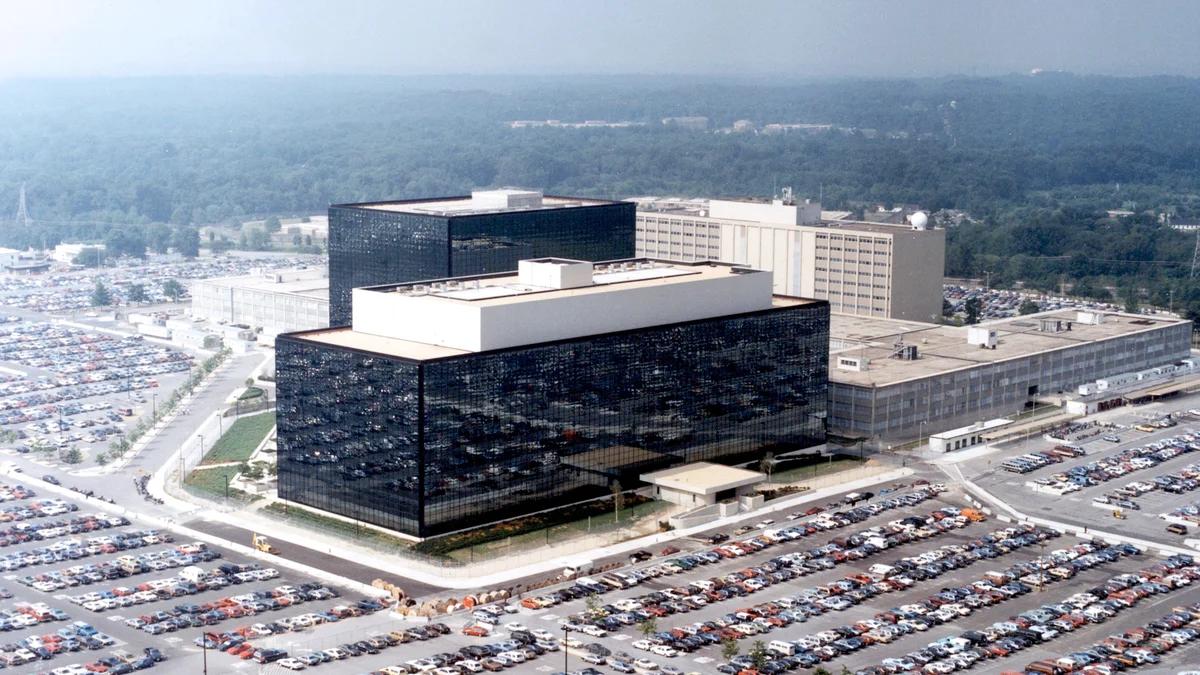
Simultaneously, the National Security Agency (NSA) and NIST issued joint advisory notices reminding federal agencies and global banking institutions of the imperative to complete migrations to post-quantum cryptography (PQC) standards. While the consortium confirmed that operational safeguards prevent unauthorized decryption attacks on legacy public-key cryptographic algorithms, the rapid maturation of fault-tolerant hardware decisively closes the window for organizations to upgrade their digital data protections against future quantum decryption capabilities.