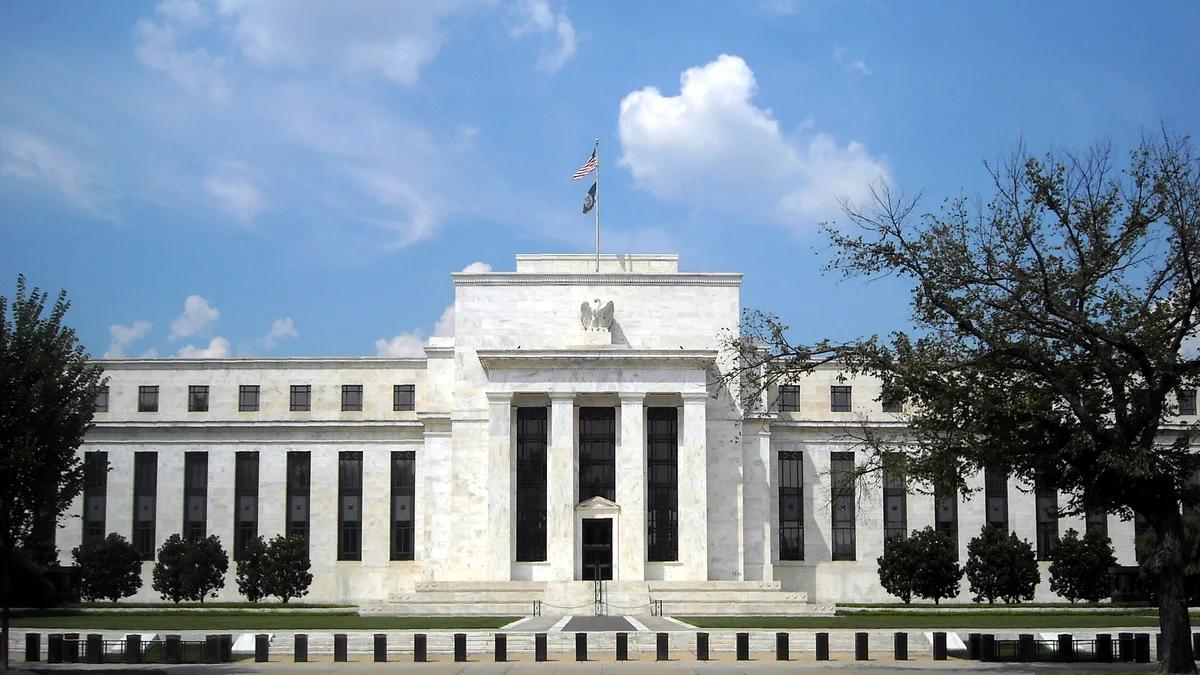
Federal Reserve policymakers signaled on Friday that the central bank is inclined to maintain its benchmark federal funds rate steady at its current target range of 3.50 to 3.75 percent during its upcoming December policy conclave. The reassessment comes as early holiday retail spending indicators and consumer confidence indexes surged well past consensus Wall Street projections, demonstrating that the world's largest economy continues to expand at a durable pace without reigniting inflationary pressures.
Retail Sales Defy Tightening Expectations
According to Commerce Department advance estimates released Friday morning, national retail sales expanded by 0.7 percent in October, outstripping Bloomberg analyst surveys that anticipated a modest 0.3 percent uptick. Early credit and debit transaction figures from major payment networks spanning the first half of November further revealed robust consumer outlays across electronic hardware, hospitality, travel accommodations, and experiential entertainment services.
Federal Reserve Vice Chair Philip Jefferson, addressing the New York Association for Business Economics in Manhattan, noted that while prior restrictive monetary tightening has effectively anchored annualized Core Personal Consumption Expenditures (PCE) inflation near 2.2 percent, the fundamental resilience of real household wages provides central bankers with ample flexibility to observe macroeconomic developments without rushing additional rate cuts.
"The current stance of monetary policy is in a very favorable, neutral-to-restrictive equilibrium," Vice Chair Jefferson stated. "We are seeing steady, non-inflationary productivity gains and a balanced labor market characterized by low unemployment and sustainable wage growth. In this environment, patience is the optimal policy posture."
Financial Markets Re-Calibrate Rate Trajectories
Wall Street equity markets greeted the central bank's balanced rhetoric with modest gains. The S&P 500 rose 0.4 percent in late afternoon trading, led by resilient consumer discretionary and commercial banking equities, while the benchmark 10-year Treasury yield settled slightly higher at 4.08 percent. Interest rate futures markets swiftly adjusted implied probabilities, pricing in an eighty-six percent likelihood that the Federal Open Market Committee (FOMC) will leave interest rates unchanged at its December 16 policy meeting.
Corporate earnings reports filed over the past seventy-two hours further reinforced the narrative of an American consumer that has adapted to stabilized borrowing costs. Retail giants Target, Walmart, and Amazon all issued upgraded forward fourth-quarter guidance, pointing to stabilized supply chain overheads, disciplined inventory management, and promotional pricing strategies that have preserved operating margins.
The Labor Market and Inflation Balancing Act
Central to the Fed's steady-hand approach is the continued normalization of the domestic labor market. Nonfarm payroll additions have averaged a healthy 175,000 jobs per month over the past quarter, while national unemployment sits comfortably at 4.0 percent. Crucially for monetary authorities, wage growth has cooled to an annualized rate of 3.4 percent—a level broad consensus among macroeconomic researchers considers fully consistent with the Federal Reserve's long-term two percent inflation objective.
As the holiday shopping season accelerates toward Black Friday and Cyber Monday, market observers emphasize that unless unforeseen geopolitical shocks disrupt global shipping lanes or energy markets, the Federal Reserve appears to have orchestrated a rare and coveted macroeconomic "soft landing."